

Closing of the diocesan phase of the beatification process for Carmen Hernández
On June 2, 2026, at the Redemptoris Mater Diocesan Missionary Seminary in Madrid, directly in front of the chapel that houses the mortal remains of Carmen Hernández, a ceremony of particular significance took place: the diocesan phase of the canonization process for the Servant of God was officially declared concluded. Present were the Archbishop of Madrid, Cardinal José Cobo; numerous bishops; Kiko, Father Mario, and Ascensión; more than 500 itinerants from around the world; and some members of the Neocatechumenal communities in Madrid. Also present were Fr. Alberto Fernández, Episcopal Delegate for the Causes of Saints of the Diocese of Madrid, and the members of the tribunal who have followed the diocesan phase of Carmen’s cause.
In his remarks, Kiko praised the work carried out by the diocesan tribunal over the past ten years in gathering testimonies, writings, and other documents pertaining to the Servant of God. “I can say,” he affirmed, “that Carmen always had the good of the Church at heart. What love she had for the popes, the bishops, and the priests! Moreover, without her, the Neocatechumenal Way would not exist. What an enormous help Carmen has been to the Way! She brought us the riches of the Second Vatican Council, of the Easter Vigil, and of the Jewish roots of Christianity. She was a theologian constantly engaged in research and inquiry. She generously placed her extraordinary spiritual intelligence at the service of the Way, knowing how to convey to us with enthusiasm the newness of the Council. Her entire life was marked by her love for Christ and for the mission of the Church.”
Kiko then confirmed that behind the very “success of the Way” lies the unconditional love she had for Jesus Christ: “A truly exceptional woman, with immense generosity, she denied herself in order to point me toward Him. She accepted to remain in the background for the sake of the brothers and sisters of the Way. For that alone, she could already be beatified.”
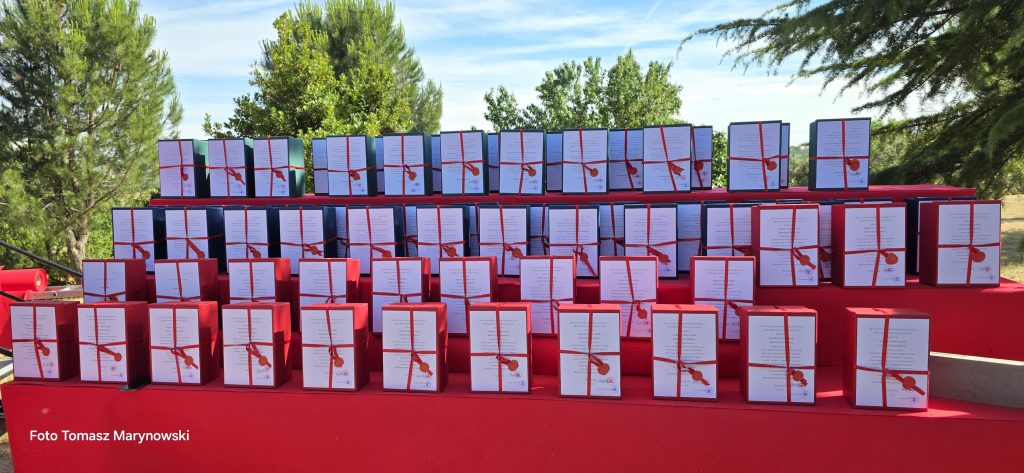
The conclusion of the proceedings was read aloud, and the decree closing this phase was signed, designating the “bearer” of these documents to Rome, to the Dicastery for the Causes of Saints. The members of the diocesan tribunal swore that they had diligently fulfilled the task entrusted to them and had maintained professional confidentiality. Next, the last of the 70 boxes containing all the written documents was sealed with lacquer to be delivered to the Dicastery in Rome.
Cardinal Kevin Farrell, Prefect of the Dicastery for Laity, Family, and Life, chose to participate in the event with a message in which he recalled Carmen as a woman of great candor, incapable of pretense, filled with a love for prayer and the liturgy, her familiarity with Sacred Scripture, her filial affection for the Supreme Pontiffs, a keen awareness of the centrality of the Paschal Mystery in the Christian life, veneration for holy places, and above all her tender and passionate love for Christ, whom she regarded as the spouse of her own soul.
Concluding this phase of the process is certainly a formal act, but one of great significance, as Cardinal Cobo emphasized in his remarks, because it is the diocese that recognizes, in one of its members and in that person’s life, the work of the Lord, and also acknowledges that person’s generous response.
Brief biographical facts
Writing about Carmen is deeply moving. Her life is so rich—filled with the mystery of womanhood, her scholarly abilities, her talents as a researcher and scientist, her knowledge of the Church Fathers, the ancient catechumenate, the world, and Jewish culture—so full of love for Scripture and for the Popes (she never missed her daily reading of their addresses in the pages of L’Osservatore Romano), so full of God that one is surprised, fascinated by her person and doesn’t know where to begin to give a brief introduction.
Kiko wrote beautifully about her when he presented her Diaries:
“Now I understand better the many fruits of the Way. God has given us a sister with a unique degree of holiness, and it could not be otherwise, given the importance of the mission God has entrusted to us. When I reflect on her love for Christ, I feel small and poor, and I do not know how to thank God for the immense grace of having had Carmen as my companion in this mission. Fifty years without stopping for a moment—traveling, reflecting, visiting so many communities in Madrid, Zamora, Barcelona, Paris, Rome, Florence, Ivrea… Listening and listening to each brother about his life, his sufferings, and his story, illuminating it in the light of faith, of the glorious cross of Our Lord Jesus.”
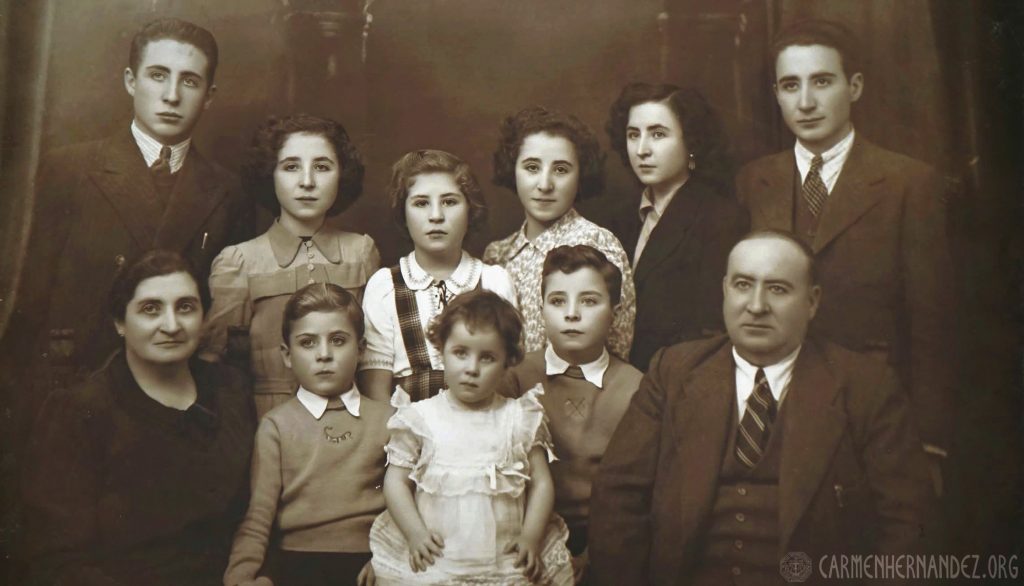
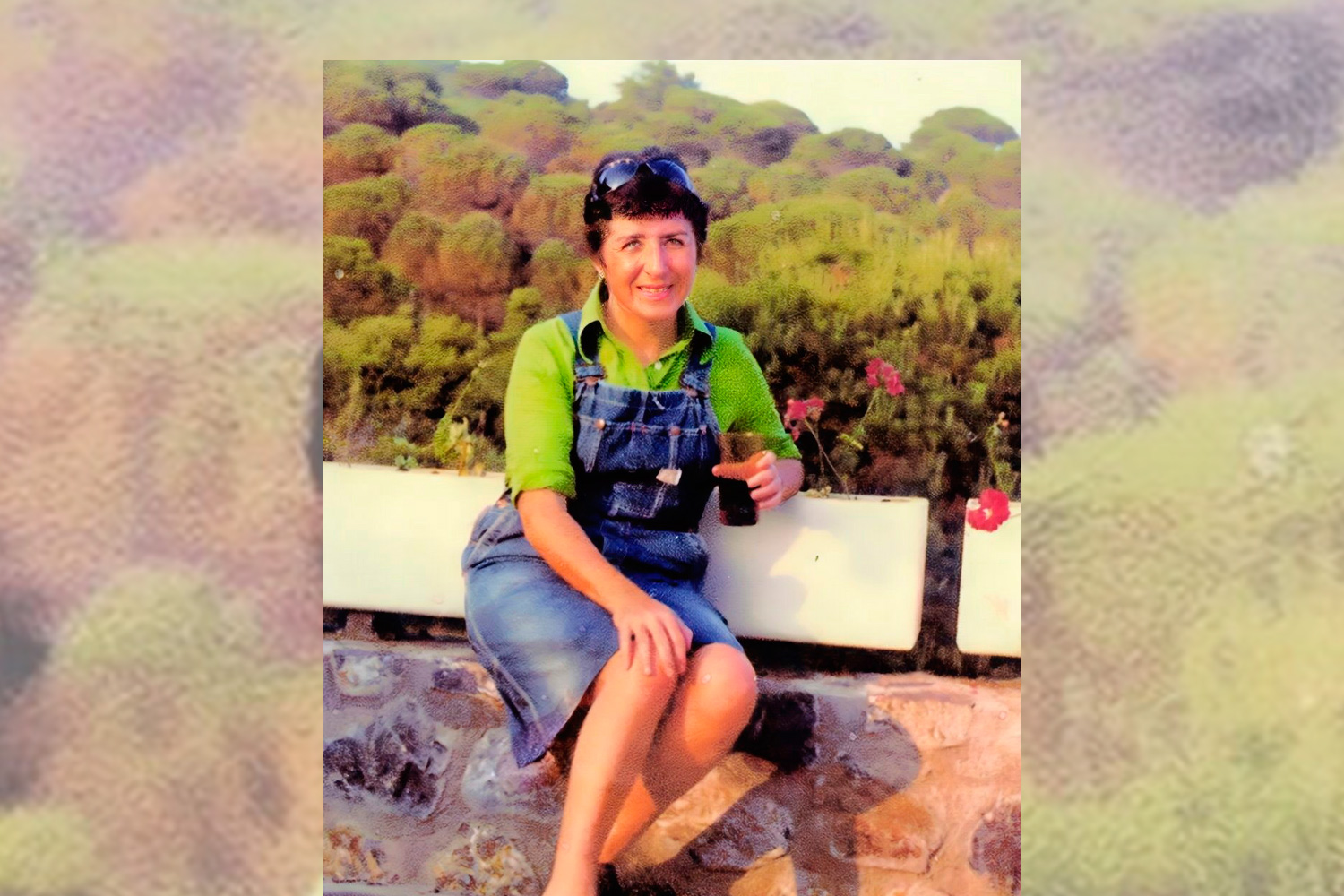
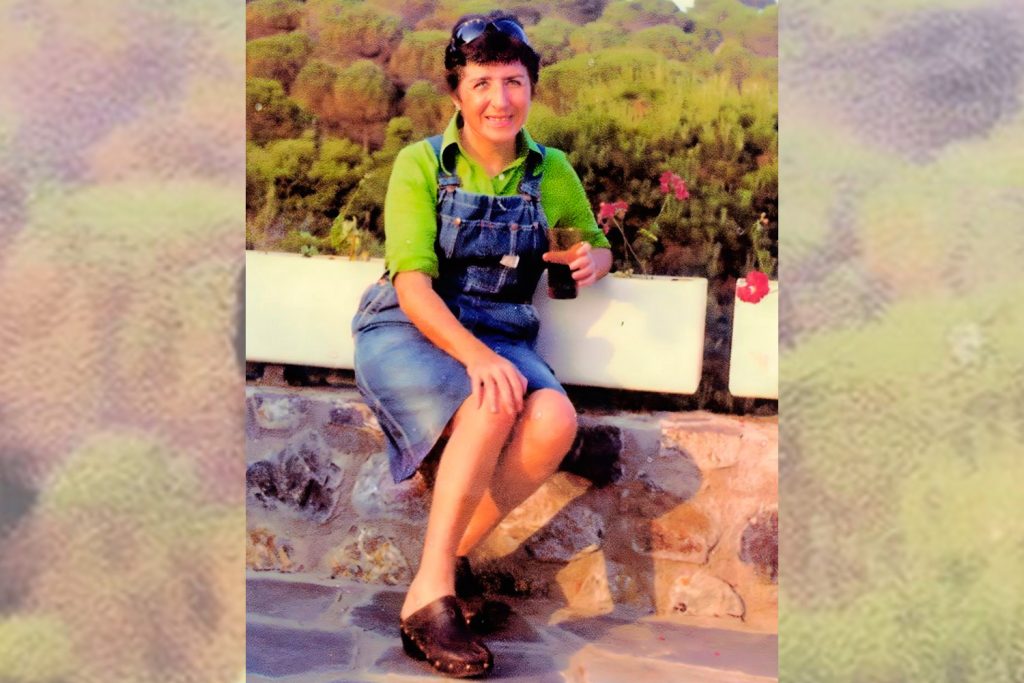
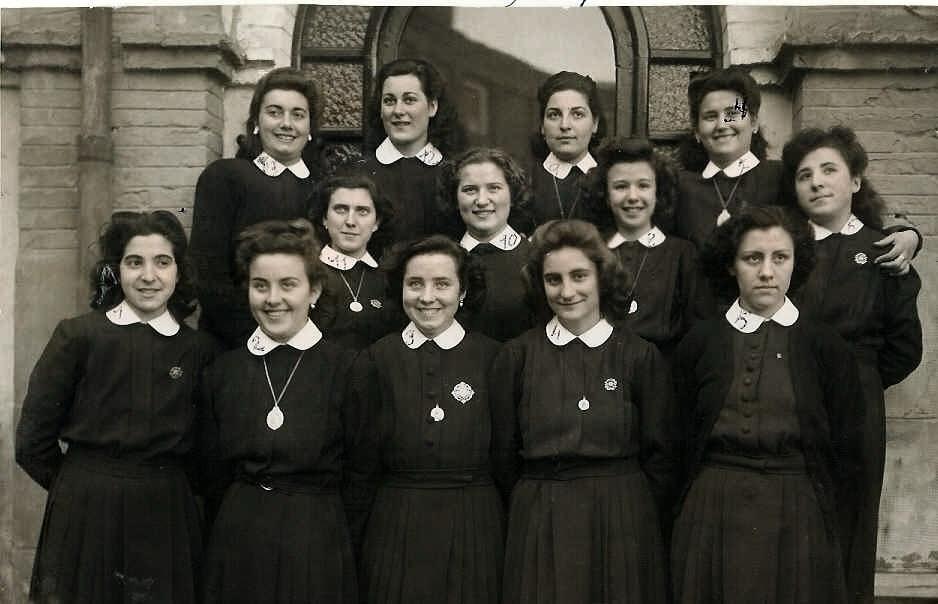
Carmen Hernández Barrera was born in Ólvega (Soria, Spain) on November 24, 1930, the daughter of Antonio Hernández Villar and Clementa Barrera Isla. She was the fifth of 12 children (three of whom died in infancy) and was baptized on November 28 at the parish church of Santa María la Mayor in Ólvega. When she was three months old, she moved with her family to Tudela and later to Madrid. She completed her studies at the Faculty of Chemical Sciences at the Complutense University of Madrid, with excellent results. She worked in various family businesses until, in 1954, she abandoned the promising career her father had envisioned for her and, following her missionary vocation, entered the Institute of the Missionaries of Jesus Christ, which had recently been founded in Spain. She remained in this Institute until 1962, when she was compelled to leave in obedience to her superiors, who did not admit her to the solemn profession of vows. The reason: she and some of her sisters in the Institute were not considered suited to the charism of the congregation. In light of the teachings on the Paschal Mystery by the Spanish liturgist Fr. Pedro Farnés Scherer, who would accompany her for much of her life, she experienced this time as a call from the Lord to offer up her “Isaac”—the missionary vocation she had felt since her youth.
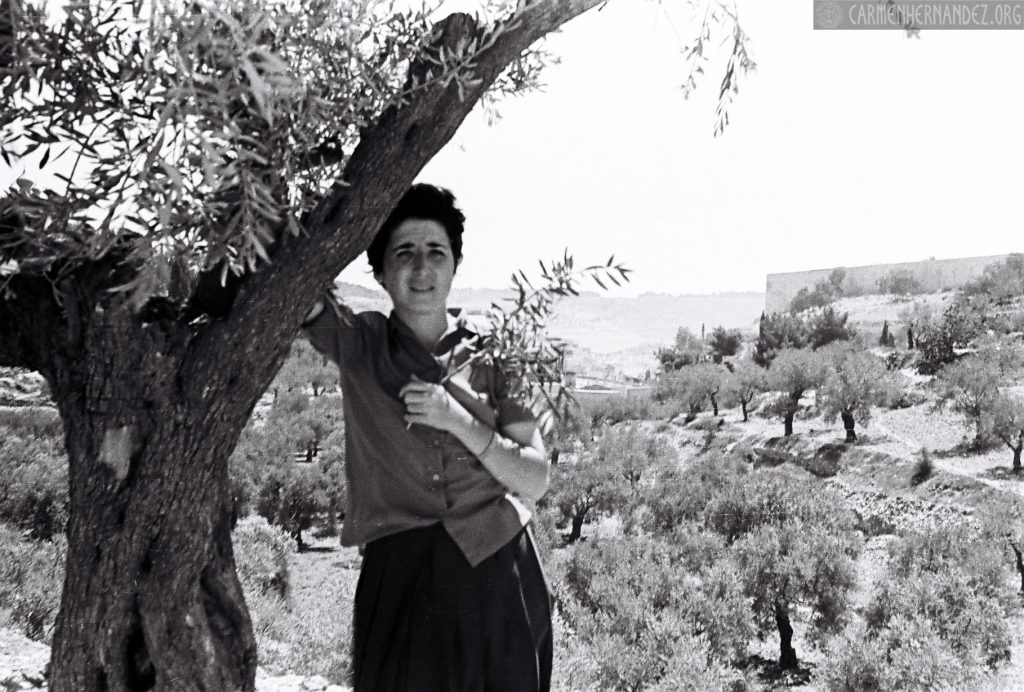
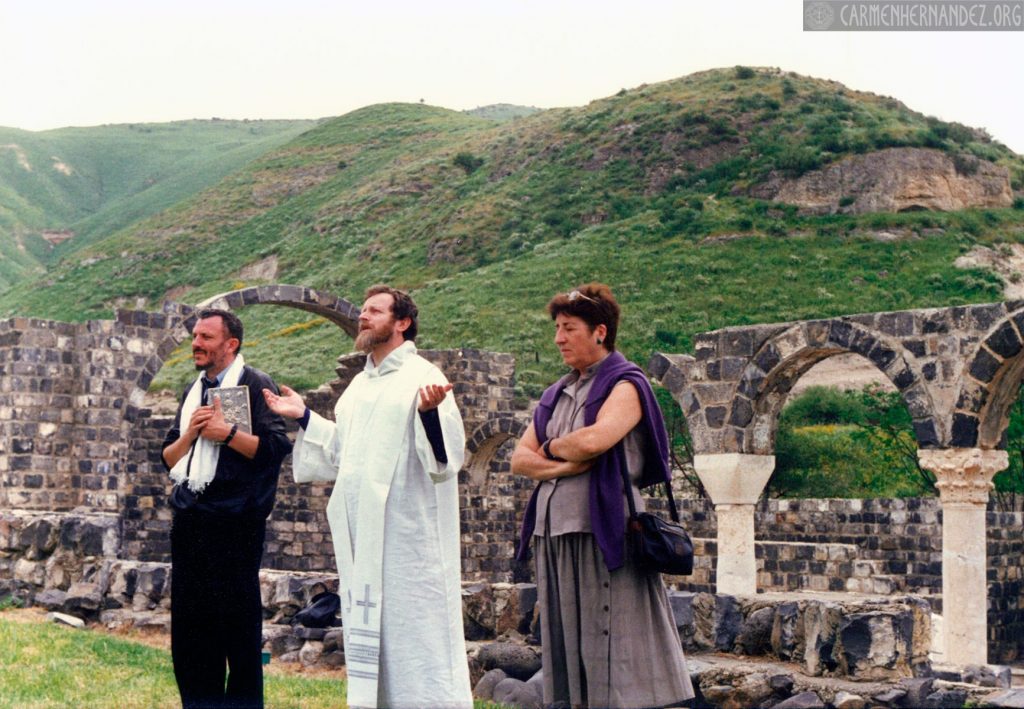
After a long pilgrimage to Israel, following in the footsteps of the events where the Word of God was fulfilled—an experience that would have a profound impact on the rest of her life—she returned to Spain with the desire to join her sisters in a new mission they were planning to establish among the miners of Bolivia… But the Lord once again directs her life toward the outskirts of Madrid, among the shantytowns of Palomeras Altas, where Kiko, together with one of her sisters, is starting something new.
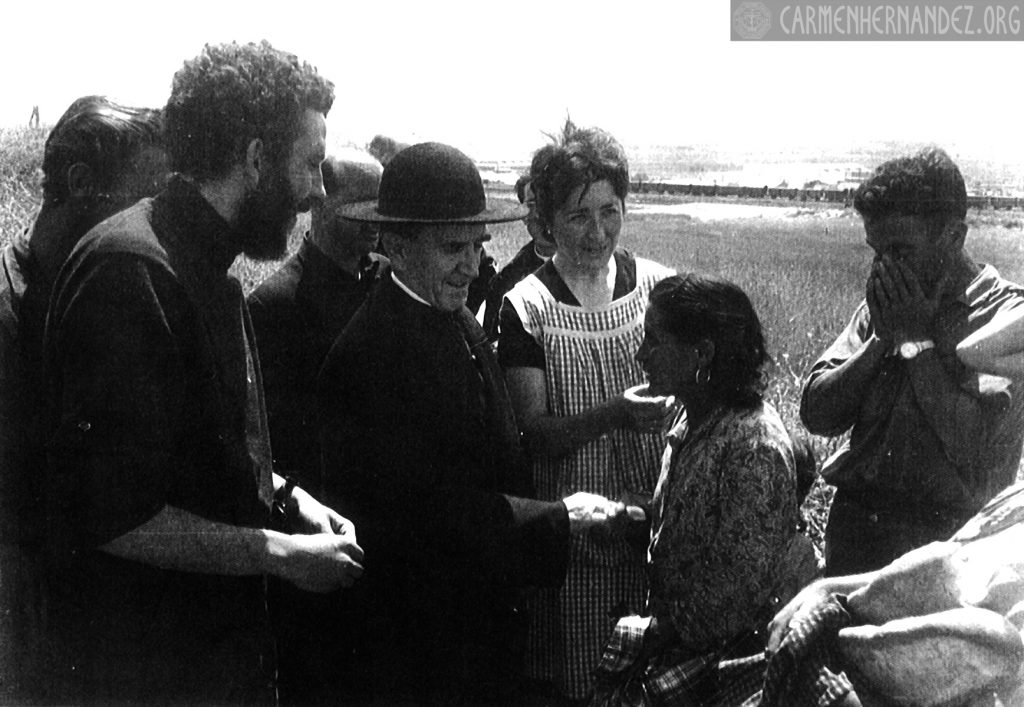
When, on August 28, 1965, the Civil Guard began demolishing the shanties in Palomeras, starting precisely with Carmen’s shanty, Kiko convinced the then Archbishop of Madrid, Monsignor Casimiro Morcillo, to go there in person to help them. His presence effectively halted the demolition; Archbishop Morcillo met the small community that the Lord was building in the shantytown and was captivated by it. He had just returned from the Second Vatican Council, where he had experienced firsthand the renewal taking place in the Church, and he understood its importance and the gift from God that it could mean for the Church. He allowed them to celebrate the Eucharist under both species and to proclaim the Word. For Carmen, seeing the Archbishop there in the shantytowns, blessing this small seed, would be the ecclesial sign that convinced her to dedicate her life—together with Kiko Argüello—to gradually forming that network of Christian initiation that would become the Neocatechumenal Way.
Carmen’s life now takes this definitive direction: her call to mission will be to devote herself entirely, offering the fruit of all her studies, of all her profound spirituality, and of all her femininity to the development of a Neocatechumenal journey. It is Neocatechumenal because it is not strictly aimed at baptismal preparation, as in the early Church, but rather at the rebirth and growth in faith of those who have already been baptized.
In short, these are the two major stages of Carmen’s life: her childhood and youth (up to the age of 30), as a time of preparation, and then, alongside Kiko Argüello—without whom, as a necessary complement, she would not have been able to act upon and put into practice that “form of Christian initiation” which is the Neocatechumenal Way.
The gift of Carmen to the Church
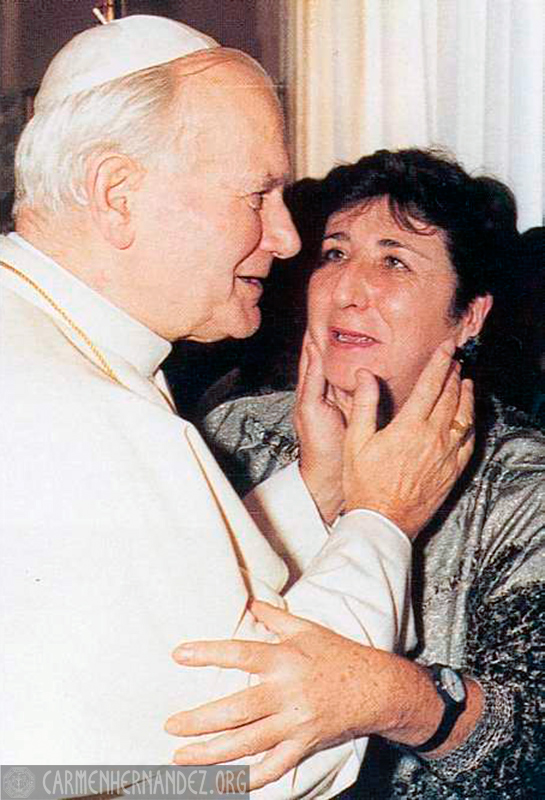
On May 5, 2018, Pope Francis described the Neocatechumenal Way as “a great gift to the Church of our time.” In doing so, he was indirectly affirming that the founders of this “form of Christian initiation” are also a great gift to the Church.
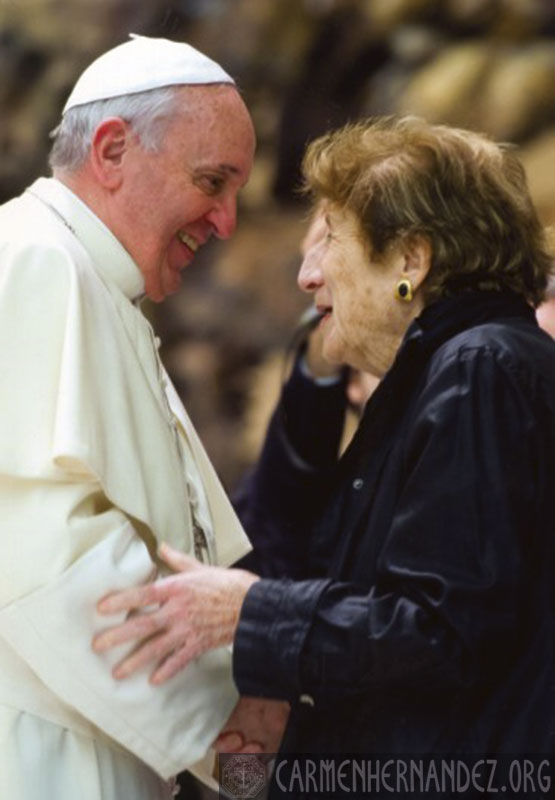
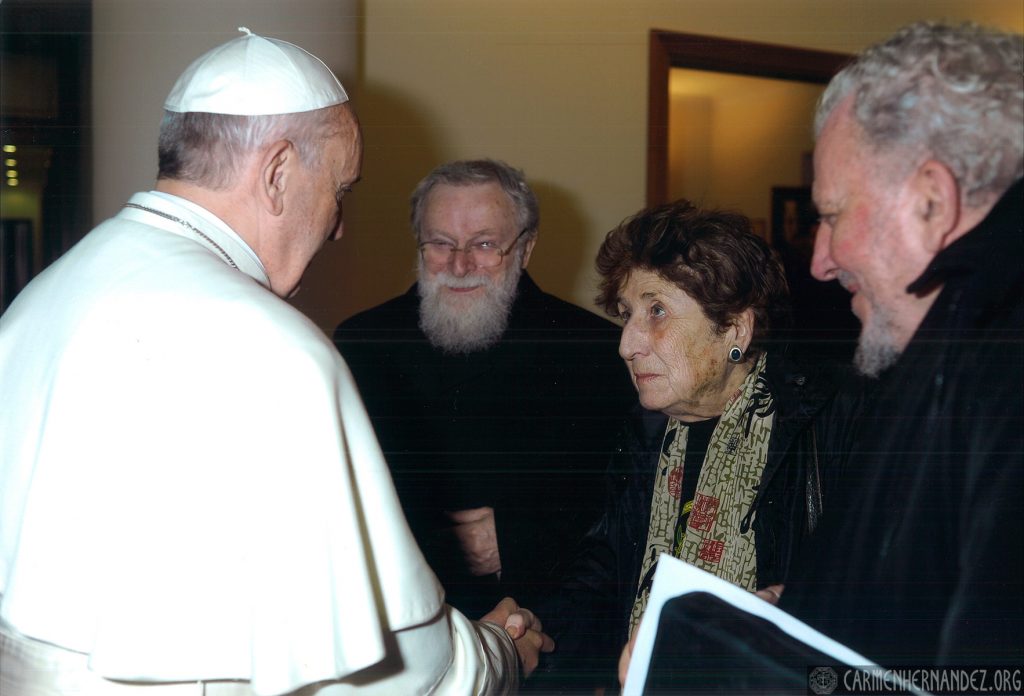
Carmen has truly been a great gift from God to the Church of our time. Pope Saint John XXIII convened the Second Vatican Council on January 25, 1959, as the Holy Spirit’s response to “a new order that is taking shape,” and affirmed that “the Church faces immense missions, as in the most tragic periods of history. For what is demanded of the Church today is that she infuse the Gospel into the veins of modern humanity.” St. John XXIII placed this event at the center of the life of the Church in the 20th century. Carmen’s entire life flows within the framework of the Conciliar Constitutions that constitute the fulcrum of this event: “Lumen Gentium”: Christ, “light of the nations,” sends his Church as a Christian community on mission in the world; “Sacrosanctum Concilium”: renews the Liturgy, beginning with Easter and the celebration of the Eucharist; “Dei Verbum”: restores the Word of God to the Church, as a lamp for our steps and a light on our path (cf. Ps 119:105); “Gaudium et Spes”: “the mystery of man is only fully illuminated in the mystery of the Incarnate Word” (GS 22).
Reading about Carmen’s life, one is struck by how the Lord, through this journey of reconciliation, shaped the stages of her existence: the missionary vocation that illuminated and shaped her from childhood onward, without respite, tearing her away from her family and her dreams to place her at the service of the Church; the mystery of Easter that unites her deeply to the Lord’s passion—even to the point of sacrificing her own Isaac—in an endless kenosis (descent), only to then unite her to the resurrection and ascension of her Lord, lived out existentially; the love for the Word of God that, first, leads her to traverse the paths of the Holy Land and, then, leads her to discover the entire history of salvation, from Abraham to the Apocalypse, in the service of catechesis, to bring all communities into living contact with the Land of the Lord; with an intimacy of life with Jesus Christ, Lord of her life: the kerygma made flesh in her history to be carried as good news to the world. And as the culmination of all this, a love for the Church—for the Pope in particular—that surprises and moves us.
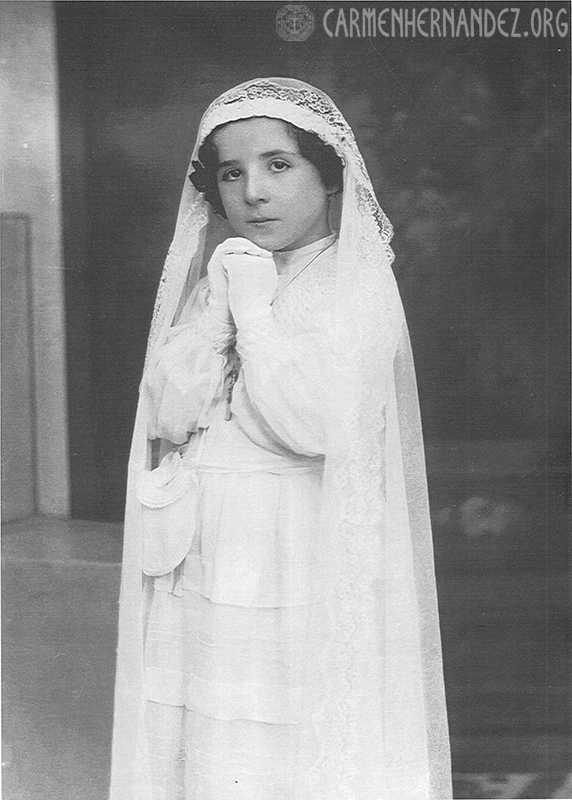
Cardinal Antonio María Rouco, Archbishop Emeritus of Madrid, wrote in the foreword to the first biography of Carmen, by Aquilino Cayuela:
“Carmen Hernández Barrera was a woman of strong and indomitable character, a Christian who was ‘prepared and willing,’ endowed with one of those charismata clarissima (‘extraordinary charisms’ in the Spanish translation of LG 12) to help renew and build up the Church ever more during the historic era of Vatican II, in faithful and obedient adherence to its doctrine and its ecclesiological, spiritual, and pastoral principles, oriented toward an ‘updating’ (aggiornamento) in order to bring about a new evangelization of humanity and the contemporary world.”
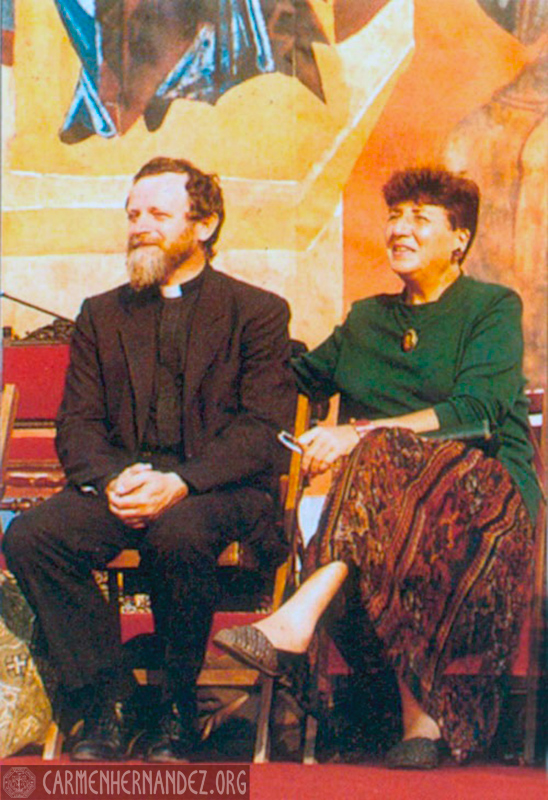
Cardinal Ricardo Blázquez, Archbishop Emeritus of Valladolid and former president of the Spanish Episcopal Conference, who knew both of these figures personally, also offers a valuable insight into Carmen’s life in relation to Kiko’s:
“Although Kiko is the catechist who always speaks, and Carmen almost always listened—sometimes praying, other times with a sense of unease, and occasionally interjecting with a pertinent reflection— it is reasonable to assume that the content of the catechesis and the development of the ‘steps’ and ‘rites’ of the catechumenal journey, as well as the organization of evangelization through itinerant, local catechists, and families on mission, is due jointly to the founding team. Each has contributed the gifts received from God. Without attempting to dissect their individual contributions, it is striking that both have remained faithful and united in fulfilling the mission entrusted to them by God, namely, to open within the Church of our time a catechumenate for the baptized, who in most cases had not been properly initiated… Both Kiko and Carmen, despite their differences and, at times, their disputes, have understood that these stemmed from the evangelizing mission that overwhelms them. Both are vigorous personalities, and although the mission has refined them, their distinctive traits have always remained alive. God surprises us with his action that touches the heart, despite the limitations of the messengers of his mercy. The two were inseparably called to participate in the work of the Gospel (cf. 2 Tim 1:8–12).”
A personal, intimate love for Jesus Christ
The passage, though lengthy, helps us understand—especially for those who knew her personally—the profound, even intimate, relationship she shared with Him, if one fully grasps the spiritual meaning of the word. But what cannot be overlooked about Carmen is her personal relationship with Jesus Christ. Without any exaggeration, I would like to speak of her spousal relationship with Him, built upon long periods of prayer and especially the prayer of the Church. I have noticed that from her “Diaries” one can reconstruct her daily Psalter, because the Psalms nourished her daily. A spousal relationship forged through an intimate, even poetic, dialogue:
When everything fades into the nothingness
and the night into darkness,
it eats the soul in the nothingness.
Lord, where? How? Who are you?
You are a mysterious, hidden God,
and your absence makes joy impossible…
Jesus, my Jesus,
I cry to You day and night.
Come, come
Love of my youth
and my hope.
Infuse me with energy,
for I am collapsing into the nothingness.
Come, Jesus. I love you.
I hope only in You.
Have mercy on my
absolute impotence,
my radical nothingness.
Come, You come,
You alone are Truth. You exist.
(January 3, 1979)
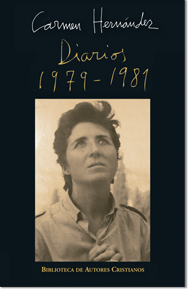
This song, which encompasses her entire life, could go on and on. Even in her final years, when suffering was a daily thorn in her side, her prayer never ceased, and this song of love never died out:
Jesus, is it an illness, or is it night?
These are the “native” complexes.
What is wrong with me, Lord?
I feel sick.
I spend the whole day in agony.
Jesus, I wake up feeling sad
and afraid, lost in the void.
All of this, for what?
Jesus, tell my soul that it is You,
that you are behind this.
Jesus, how mysterious is life,
how mysterious are men.
Jesus, is it possible?
Come, Lord, have mercy on me,
illuminate your face, come.
The night.
Nothing interests me, and I see nothing.
Without you, there is only nothingness.
Without You, how is any of this possible? [1].
Jesus, you are the strong one,
The initiative and the victory are yours,
You are love,
Jesus, if you were to come tonight
in this night,
If you were truly real,
Jesus, you would see a young girl’s daydreams,
teenage insecurities.
Where are they, Lord, those most ardent loves?
How wonderfully you comforted me in my youth?
Where do you hide when I start to lose my strength,
When night falls and life fades away?
Jesus, come, if it is all true,
and you are ever-present to me, like a sweet breath
and the past and the future are real
and you are with me, kiss me, Jesus,
and tomorrow we will go off on our own
in the midst of this materialist world that celebrates you.
Jesus, let us be free,
uninhibited, happy, trusting, and loving one another,
I will give you your love, so that you will come to me sweetly and gently,
Come, Jesus, make life real,
Jesus, make it last forever.
Tell me who man is,
Jesus, my Lord.
(Sunday, December 19, 1971) [2].
From Carmen, I am left with these certainties, which may pave the way not only to holiness, but also to her becoming a “Doctor of the Church”: her love for and theological insight into the Word of God, her love for the Liturgy and for Easter, her desire to bring Easter to the heart of the Church, her love for Israel and for God’s revelation to that people, and her passion for women—her very womanhood has helped thousands of women appreciate their own femininity, reconciling them with their marital history or inspiring them toward the contemplative life.
Carmen, a woman of our time whom the Lord chose entirely for Himself, who—together with Kiko—has left her mark on this moment in the history of the Church by creating a diocesan model of Christian initiation that is bearing abundant fruit in conversion and mission; a woman whom everyone hopes to see crowned and raised soon to the glory of the altars, to sainthood.
P. Ezechiele Pasotti
[1] Take, for example, these early entries from his published personal diaries, written between January and February 1979. See C. Hernández, Diarios 1979–1981, nos. 1, 11, 21, 35, 38.
[2] Documents Carmen Hernández , Vol. 32, Personal Diaries and Writings 1970–1971, December 19, 1971.